


This is a rich, personal and wide-ranging conversation that will resonate with anyone carrying the weight of leadership — whether in a church, a charity, or a community. It is also an invitation to reflect on your own vocation, your relationship to power and control, and how your spiritual life feeds and sustains the work you do in the world.
“If we’re wanting to see more good in the world, if we’re wanting to see more justice and more peace, then we need more leaders who are modelling and enabling something different…”
WENDY BALL
Episode notes
In this episode of the GoHealth Podcast, Gillian Straine, CEO of GoHealth, steps into a different kind of conversation. Rather than interviewing a guest, Gillian joins organisational consultant Wendy Ball for an honest, searching dialogue about what it means to lead well in a time of deep instability, in the church, in our organisations, and in the world.
Wendy Ball works with impact networks and charities to strengthen their identity, shared vision and partnerships. Her work has been described as being ‘a life coach for organisations’ — accompanying leaders and teams as they give attention to relational culture and strategic intent.
Together, Gillian and Wendy explore:
- The strain and burnout that leaders across sectors are experiencing.
- What ‘sane and regenerative leadership’ looks like.
- Personal wellbeing rooted in theology.
- The value of good practical systems.
- Gillian’s personal leadership journey.
- The qualities of grounded, resilient leadership — including the courage to ask for help
- Wendy’s vision of ‘lovefare’: organising effectively for connection, justice and the common good.
People & Resources Mentioned
- Margaret Wheatley — Who Do We Choose to Be? Facing Reality, Claiming Leadership, Restoring Sanity
- Simon Sinek — Start With Why (concept of beginning with purpose)
- Jim McManus — Head of Public Health and Wellbeing for Wales, former President of GoHealth
- Toke Møller is a co-founder and leading practitioner of the Art of Hosting and Harvesting Conversations that Matter — participatory leadership practitioner; quoted on asking for help as a quality of trustworthy leadership
- Martin Luther King — ‘Those who love peace must learn to organise as effectively as those who love war’
- Wendy Ball’s work — find her via linktr.ee and click here to sign up to her mailing list to learn more about her lovefare work.
About Wendy Ball, Gillian Straine and GoHealth
About Wendy Ball
Wendy Ball partners with social impact organisations to help groups work better together and be more effective in the world. She is a consultant, facilitator and process designer with an enduring curiosity around how people and systems organise for the common good.
Wendy is dedicated to strengthening (what she calls) our ‘lovefare’* – the intentional effort of groups to bring more justice, love, and wellbeing into the world.
Wendy cares deeply about impact – and equally about how we get there. With over 20 years’ experience alongside organisations, networks and movements, she is skilled at working within complex systems. She helps groups align their purpose, culture, and ways of working to strengthen teams, partnerships and the contributions they make.
Alongside her consulting practice, Wendy is a photographer and visual artist. Her hand-portrait project ‘That We Belong’ celebrates our shared humanity.
Across all her work, Wendy is driven by a conviction that how we collaborate and organise together shapes what becomes possible – for people, organisations and our wider world.
*About ‘lovefare’: If warfare organises around conflict, lovefare organises around connection. Lovefare is a new word for the vast, vital work of building a more just and flourishing world. The Lovefare project (curated by Wendy Ball) is for those working to make the world fairer, kinder, and more sustainable. Lovefare is a home for people who want to organise better, so more good things happen in the world. Join the mailing list to get involved or learn more.
About Gillian Straine
She is passionately committed to health, healing and Christian living. She is a cancer survivor, Anglican priest, theologian and scientist with a strong interest in communication and teaching. She has a doctorate in Physics from Imperial College London and an MA in Theology from the University of Oxford. She is particularly keen to bring the study of science into conversations about Christian healing. She is the author of Introducing Science and Religion: A path through polemic (SPCK, 2014), The Limits of Science? (CSP, 2017) and Cancer: A Pilgrim Companion (SPCK, 2017).
About GoHealth
GoHealth is an organization with a vision to enable churches and individual Christians to be a healing presence in the world. The GoHealth Community offers online courses, monthly gatherings, and a supportive space to explore how to connect faith and health
Transcript
Gillian Straine: Welcome to the Go Health podcast. I’m Gillian Straine, Chief Executive of GoHealth, an organisation with a vision to enable churches and individual Christians to be a healing presence in the world. And on the GoHealth podcast we have great conversations to inspire us all to connect health and faith for the benefit of all. And on today’s episode, we’re doing something a little different. Many of us sense that we’re living through a time of deep instability, not only in the wider world…we put on our news at night, but also in the church and in our institutions. Leaders are carrying an extraordinary weight and things that once seemed set in stone, are now looking fragile. And on top of all this, we know in our churches there we have cultures that need reshaping. We’ve got to face up to some safeguarding failures, and that there are decisions ahead in the institutions we care about that will require courage. And so at this time especially, we need leaders to look after themselves, to stay healthy and grounded and spiritually alive.
At GoHealth when I’m out and about in the world doing training, I spend a great deal of my time in conversation with these leaders. And you know, again, I’m hearing again and again the same stories of stress, burnout and fragility. But I’m also hearing stories of vision, of longing for change and a deep passion still to make a difference to the times we’re living in. So that’s why in this episode, I want to explore how leaders can lead well, tell their stories, handle power wisely, and how organisations themselves sometimes need healing.
And if we’re going to do that, that’s where the spiritual life of our leaders really matters. So over recent seasons and episodes of the podcast, I’ve spoken with lots of different people with theologians, practitioners, scientists and thinkers giving them space to answer my questions. And that’s been great. But today I want to get into the conversation myself, if you’ll allow me, with someone else, with someone who has great vision and purpose for the difference that good organisations can make in the world.
Wendy Ball is a consultant who strengthens the identity and shared vision and partnerships of value based organisations. Wendy has a background in nonprofit branding and graphic design and organisational development. Wendy, welcome to the GoHealth podcast. How are you?
Wendy Ball: Hello, Thank you. Thank you for having me. Lovely to be here.
Gillian: So I’ve just done your like CV, kind of LinkedIn, this is who Wendy Ball is, but Wendy how do you introduce yourself?
Wendy: Oh, what a lovely invitation, thank you. Oh, so I guess in a professional context, I work with Impact Networks and charities or other organisations that have some sort of primary intent to bring good into the world. So I accompany these different groups and organisations to enable them to work better together. And that that is not just internally, but also in terms of how they work in partnership with others. So someone once described me as a a life coach for organisations, and, and I kind of see where they’re going with that. So it’s kind of yeah, being a companion to senior leaders and to teams, and together giving attention, we give attention to the relational context of their organisation as well as the strategic intent, of, of what they’re trying to do in the world.
So, so it’s lots around culture, around organisational development, around communications internally as well as outside in the world. And helping to foster a kind of collective clarity, because I think there’s something about having that common language and common frameworks that helps us build cohesion and momentum in the work that we’re doing.
Gillian: Yeah, and full disclosure, we’ve worked together. Right. So this.
Wendy: Yeah, absolutely. Yeah. I think we’ve been on a journey together for about three years or so. And like when I’m introducing myself, I would often like to speak to what motivates me in the work. And obviously its effectiveness. Like, I want those who I’m working alongside to be making a kind of progress towards what they most care about.
But there’s a deeper conviction and drive for me, in this work. And that’s, I think so many of us long for some big and beautiful changes in the world. And it it is hard to see how they’ll come about, but they definitely will only come about if we work together. So yeah. So that’s that’s what I do. I, I try to accompany organisations and networks, so that we can explore what, what helps us work well together and be well in the work as well.
Gillian: For people who are listening. I immediately sort of chime with, yes, we’ve got a vision. Yes, our systems are tough. Yeah. And there’s just so many different types of organisations. I’m sure that resonates with, for people who are passionate about about what they do.
Wendy: Another aspect to string to my bow, I also have an artist self, so I would describe all that sort of professional work as my out-loud work in the world. And my other work I would talk about as being my quiet work in the world. And some of that is a lot of creative endeavours, including photography. So I take hand portraits, to kind of acknowledge interconnection, and a people’s place in the world, our place with each other. And I call that work, ‘that we belong,’ that that sort of series of handful portraits. So so yeah. So that’s something of some of the ways in which I would introduce myself.
But how about you? You’ve introduced the podcast. But I’d love to hear a little bit more about how you would typically introduce yourself and, and the work you do in the world.
Gillian: Thank you. Yeah. Goodness me, it’s weird being on my own podcast and somebody asking me a question. Okay…
Wendy: Sure.
Gillian: This is my moment. So thank you. And it’s it’s interesting how we introduce ourselves in different ways, in different contexts. So I guess how I’d introduce myself in this work depending on who I’m talking to. So I’m an Anglican priest within the Church of England, although deeply influenced by a Presbyterian upbringing in the Church of Scotland. And part of that is a sort of theological training. But more importantly, work in the parish, in London, in Oxford and other places, which has really grounded in me, the importance of community and being eyes open wide about how you can make real difference in the world is through individuals in their community, in their contexts of which they’re an expert. So that that’s part of what who I am.
I’m also scientist. So my PhD is in physics. So an early love of trying to understand how the world works. But, I guess my, my approach to science and the way I continue to think about science is, yeah, it’s about head knowledge, but where science, I think is really exciting, the fuzzy edges of science, where there’s lots of unknowns, it’s the science can really help us, understand not just how the world works, but how to be in the world. So I enjoy taking that into my worlds when it comes particularly to health science.
I’m a cancer survivor. I’ve got personal experience of serious ill health, surviving that and thinking, that therefore the difference between curing, you know when the doctor says you’re in remission, go well. And what healing means at a deeper level.
And my day job, in which I coalesce all of this is I get to be the Chief Exec of GoHealth, working with a fantastic team. And it’s wonderful to have small, agile, organisation working with our trustees, of course, as well, with a clear vision and purpose. And we’ve seen growth, in terms of who we’re working with. And that’s sort of yay for us. But I think what that is really talking about is the need in the world right now for, healing and wholeness and making a difference. So I get to combine all of my personal stuff with my faith and my vocation as a priest to run an organisation.
But where I’ve seen it working really well is when we speak clearly to the vulnerability, that that I have, that our organisation has because it’s great to have vulnerability in the world. And a degree of honesty around that, I think, has been really important in helping us grow.
Wendy: That expansion that you’re talking about, sorry I cut you off there.
Gillian: Yeah. No, that’s exactly so let’s be honest about what the world’s like, what the church’s like, what life’s like. When rubbish comes along, it hits you. Let’s just be honest about it. You know, if you’re a person of faith, Jesus loves you, but doesn’t solve all your problems. So in terms of your role, what do you noticing in the world today and in terms of how we need to support leaders?
Wendy: Yeah, what am I noticing in the world now, there’s a big question as to what we need from leaders? I think it feels a particularly poignant question in these times. It seems to me that there’s a huge amount of strain and harm and conflict, even, that’s being perpetuated by many of our leaders, and our systems, and I, I’m not I know that not all of that harm and strain is intentional, but it’s there as part of our collective life.
I kind of see or notice so many mindsets that are not driven towards life-fullness. It feels like there’s a lot of us and them. The sort of, you know, we’ve got a longstanding, widespread extractive mindset as well towards the natural world, which is, of course, our home. Right. So I think if we’re if we’re wanting to see more good in the world, if we’re wanting to see more justice and more peace, then we we need more, more leaders who are modelling and enabling something different.
Gillian: So when you’re talking there about us and them and you’ve mentioned the environment, what other systems or structures are you talking about there?
Wendy: Well, I just…for me it’s not even just in the systems and structures. Yes, of course it’s in the wars, you know, like that that are playing out of just, you know, who has validity and who’s resources are we going to use or draw on, or who, who has a right to life, even, in terms of, you know, whether somebody can kind of remove what is sustaining you in your country.
But for me, it also goes into the systems within our organisations, you know, just like, are we about like the, you know, there’s so much speak about the management or the organisation when actually all of those things are people. And so why are we not talking about them in terms of people terms? So there’s something of, of that.
And I think, what’s it in systems thinking that have like, we’re not going to change these systems, using the same thinking that created it. We’re not going to change our systems using the same leadership approaches that created them. I think, I think we need leaders who are rooted in kind of regenerative thinking. You know, and I appreciate Margaret Wheatley here, she, she’s written a book, called ‘Who Do We Choose to Be’, and she uses the term sane leadership, which just chimes so much with me. I just like, lands on me like water on a sponge. You know how much we need sane leaders. And she describes sane leaders as those who have the unshakable belief that people can be generous, creative, and kind. And then they work, these sane leaders work to foster environments in which we’re more likely to show up.
Gillian: Is that regenerative leadership that what you’re talking about there?
Wendy: Well, I think it is regenerative leadership, which, of course, is drawing on the principles of nature. Like she speaks about it as sane leadership. And, and that sense of, of creating islands of sanity, you know, where yes, I think it is where you’ve got like more, more potential for flourishing. And I think, it’s not for me, it’s not even about seniority necessarily. You know, I think we need sane leadership across all spheres, like whether it’s in our homes or our social circles or our community spaces. You know, I advocate that we definitely need more sane leadership in our political institutions at the moment.
But probably also within our religious institutions, which is, of course, your context. I mean, what what what for you, your work, your work is largely within, the church and with, Christians. What what are you noticing about leadership?
Gillian: Yeah, I, I felt when you were talking there, Wendy, about, systems are people, with, you know, within them that I was really thinking about the, the stories I hear from people on the ground in our churches talking about the structures they live within, even to go as far as talking about the trauma caused to church leadership by the institution they’re working for, so deep, entrenched problems in some areas.
With our, our organisation, particularly at this time when, there’s a lot of anxiety within the church. There’s anxiety over decline in numbers. And people get really worked up about this and then, operate out of an anxious place in terms of shoring up decline. And then that has a trickle down effect on others. And then that’s interrelated with anxiety around power, around inheritance in terms of buildings, but also systems. Big anxiety around safeguarding and so on.
Wendy: Oof, as you’re talking, I’m just feeling…That building off the tightness, it’s kind of a doesn’t feel regenerative, you know, it doesn’t feel, it’s got a tightness to it. Yeah, yeah.
Gillian: And it’s whatever the opposite of regenerative. That’s what it feels like. And then that’s, so I spend a lot of time listening to people’s stories which are not just, gosh, I’m having a bad day or, you know, it’s it’s stories of breakdown – mind, body and soul breakdown of human beings, beloved creatures of God who are trapped in this system, which is supposed to be the body of Christ, the church. And yet they’re so trapped within it and not just folk on the ground. Often I go to do training days, and I hear clergy and lay leaders telling me deep stories of burnout to the point I’m doing mental health intervention, sometimes, if I’m that worried about what people are saying, and there’s no clear roadmap ahead.
I guess, in terms of human identity, part of our identity, identities, being able to imagine our future, I think as a, as a, as an institution, we can’t imagine the future at the moment because there’s such sharp questions over who we’re going to become. So I don’t think any of this is easy, but I think that’s sort of a sketch of of where I am around systems and leaderships, and the churches.
Wendy: And that sense of, of naming what is? As you’re speaking, I’m hearing a kind of a plainness in terms of trying to say, you know, that this is what is and this is our firm ground to be walking on or to be leading from.
Gillian: Yeah. Yeah, absolutely. One of the things I value about you, Wendy, is you’re always learning stuff. And, every conversation I’ve got another book to read. There’ll be show notes if anybody wants to follow up on any of this, what’s your learning edge right now when it comes to leadership and living in the world?
Wendy: Oh my gosh. Okay. Well, I’m always learning from those I’m working alongside, and I work alongside diverse organisations, so I feel as though I’ve got a rich petri dish to kind of draw on for what I’m doing. And so, actually, one of the things that I’m working on or learning and wrestling with and kind of developing a muscle around, I’m is from what I’m learning from you and your team in terms of, you, you guys draw on quite a lot…you folk often draw on the phrase ‘minimum viable product’.
You know, your try it and see mindset or approach. And I remember you mentioning that to me in a conversation last year and just that, that whole idea of prototyping and just putting stuff into the world to see how it lands, you know, working with when is it useful and valuable? You know, put at that point launching something, in its current state, even if you can imagine it could be developed in different ways or fulfill a different potential.
Whereas for me, up until that point, up until that conversation, even though I’d been aware of the concept minimum viable product, I’d never heard it explained in those terms, that you and your colleague Graeme were speaking to it. I think he uses that a lot in in the work that he does. And I think that that sense of for me getting, getting comfortable with the imperfection of something so that it can be a gift, but also so that it can then adapt in line with what people actually need and with what people connect with. So I think that’s, that’s that’s one of the things that I would put into that.
How about you? What’s on your leading edge at the moment?
Gillian: Well, I got something that you fed to me, so around, something like a…
Wendy: It’s like we’re stroking each other’s learning edges.
Gillian: Exactly. So, yeah. How to grow a membership organisation. GoHealth is a membership organisation, as well. So, one of my big questions is how to grow it for good reasons. How do we get the message out there about health and wellbeing and flourishing? So I’ve been looking at some studies that have been done on that question how to grow membership in the world that we’re living in.
And some of the interesting, analysis has been helping people to understand membership as a shift from transaction – give me money, I’ll give you stuff, into participation.
Wendy: Yeah.
Gillian: So join us and join in with the vision we’re seeing in the world. So that’s really exciting I think for GoHealth.
Wendy: Yeah, that more co-creation approach to engaging people and engaging with people. So joining with in journeys, not speaking to or…
Gillian: Yeah, exactly. To see the change you want to see in the world. And I think that’s, that’s really exciting.
A lot of vulnerability as well, I think. And that’s, personal development for me, but because I’ve often seen in the world. So I was doing this thing the other day in Wales, they got a new leadership thing going on there, and I’m one of the coaches. I just introduced myself, and I wasn’t prepared. So this is. That’s not a good thing. But anyway, so I stood up. I said, well, I’ll just tell a story because these are all ministers. So I stood up and said, look, I’m here because I struggle to minister. Yeah, I struggle with my well being in ministry. It pushed me to the edge, it shouldn’t be like that, folks. So now I do this other thing.
And, then the feedback was – a bit of vulnerability is, is, is that help helped us to connect as well. So how do we do vulnerability. And so another part of my learning edge is around it’s always around personal wellbeing. And, you know, you can’t run a wellbeing charity and not try to look after yourself. So a lot on personal wellbeing and how we how we support others look after themselves for, for their mission. Because, you know, it’s not obvious.
Wendy: I would love to hear you say a little bit more about that, specifically in terms of, personal wellbeing for, for leaders in, in these positions where, as you say, there’s, there’s so much to do, the ambitions are high.
Gillian: Yeah, the ambitions are high, particularly in the church as well. Often the, the barriers are high around vulnerability as well, because there’s this idea is supposed to always be strong, always be clear, and so on. So sometimes, people are surprised that church people have wellbeing issues, but those inside the institution know that it can be really tough.
But my learnings been in my own journey, trying to live out my own vocation, is that if I don’t look after my mind or my body, other things fall apart. But it’s not a head problem. It’s not like any of us listening, listening now [don’t] know you’re supposed to eat your fruit and veg. You’re supposed to get sent to sleep. We all know.
Wendy: aha.
Gillian: But the trouble is doing it, so it’s not a head problem, it’s a heart problem. And and so when we work with leaders and I’m speaking to myself as well as other leaders and so on, is this is we have to know why we’re looking after self, it becomes a theological problem…
Wendy: Okay.
Gillian: …for us as well, and how we root self-care is really important. So for many people, the theology of sacrifice, I must sacrifice myself. I must pick up my cross and follow Jesus has knock on mind, body and soul, embodied well-being implications. But also it has implications because it’s so hard to measure how well you’re doing in ministry in any kind of these, vocational jobs. But we can measure how tired we are right? I must be doing well because I’m exhausted. And that edge of competitive exhaustion that you often see when, visually, visionary vocation, the folk get together because it’s so hard to otherwise measure our impact. So well-being, if we’re going to frame it theologically in not sacrifice, but in flourishing, Jesus came to give us life in all abundance.
If we’re going to root it there, that we need confidence and courage to go against culture of exhaustion, and instead value ourselves as God values us in the work, so it becomes theological. If we want to truly align our vocation with how we flourish in the world.
Wendy: And as you’re speaking, I’m chiming with some of the things that you’re saying in terms of the context that I work within. Like, obviously most of my contexts are not theological. And I, I’m picking up those themes, but I’m also picking up, it seems to me that and from things you’ve said before, that it’s not always the mainstream view that personal well-being for leaders is something to value and encourage. You know, the, you know, as an institution or even within local, I suppose, congregations and community groups. Is, am I reading that right? Am I reading your things…
Gillian: You are, and for lots of reasons, I think that people project stuff on to leaders that’s not necessarily correct. We want to appear strong and to to, have it all together at all times. We often live in systems that don’t help us look after our well-being, because we are often part of anxious institutions that are worried about…So I remember working in one diocese or being in one diocese where, the bishop, this was an Anglican context, but it’s absolutely true in other contexts too, was always on Twitter. You know, you know, another, you know, seventh night in a row, I’ve been baptising and confirming, hurray for Jesus. You know, I haven’t you know, I’ve you know, I haven’t had a holiday for forever. And that creates a culture where people were afraid to say, Mr. Senior Leader, Mrs. Bishop, whatever, I’d like a sabbatical, or a break, or I’m not coping. And that’s why I use the word on purpose – courage – to choose a different way. Because how missionally attractive would it be? Church leaders who are non-anxious and looking after themselves and creating space for others in the world that we are living in. This is a missional thing. It’s not just, lets live longer for Jesus thing.
Wendy: Yeah, yeah. No, it’s interesting hearing you speak like speak that in your recounting of that story of the the bishop and that kind of that…it’s not performative, but it is the sense in which it’s not okay to talk about not being well or needing, to build in systems that are supporting a wellbeing more like, for me, that hearing or that is actually leaning quite heavily on me. There’s a you know, I’m grateful that actually it feels like in many contexts, like within the the most of the charities that I’m working alongside or the networks of movement building, over the last 10 to 15 years, I’ve been seeing a real drive and energy towards a recognition that the personal wellbeing of our leaders and our teams is pivotal for the work. There is still, as you say, many challenges as to how we do that and many of our systems are not yet enabling that. But there is a de facto agreement that this is pivotal and and unquestioning. So it is, it is, I do find it really sobering to hear you speak that within much of a church context, that isn’t the culture or the way yet. But but I, I hope it changes and faster than we imagine.
Gillian: And you’re right to be shocked and surprised, we musn’t lose that. And of course, I’ve got a negative bias as I hear the bad stuff more than the good stuff. So just acknowledge that there’s good people. But yeah, let’s hang on to that shock. It shouldn’t be like that. And Wendy, from your perspective, worked with us at Go Health and other church organisations, but you work with loads of other people too. So let’s lean into that a little bit now. Your wider experience around leadership and teams, say something about how we can connect big vision stuff to the actual work of teams in the organisation on the ground.
Wendy: Yeah, there are a lot of starting places, but for me, the place to start is making sure we’re clear on what the big vision is. So it’s it’s about alignment, especially within values driven work. And so I would typically start with, are we clear about what is the purpose of who we are, as an organisation and our vision, getting really clear and explicit about these, as well as what’s the ethos or the the values of principles that we want to underpin, how we do the work, how we govern ourselves, the ethos being, you know, like the beating heart. If it isn’t there.
Gillian: Yeah.
Wendy: Then, you know, our systems and our funding and our personalities are going to drive, are going to dominate.
Whereas if we’re letting ethos shape culture and systems, I think we’ve got a better chance.
Gillian: Okay. And on the ground, what does that mean on the ground?
Wendy: I think in terms of as I say, getting clear about it, one of the things that that I, talk about is Simon Sinek is somebody who says, start with why?
I think that’s a really helpful, you know, starting point to understand the need, understand where you’re going. But it’s also not just why but what? What are we, what are we doing? And in my experience, many charities and social impact organisations are, great at speaking to kind of broad terms to the vision, but not specifically what are we, what are we doing in terms of getting to that vision?
Or what are the specific values that we value together and will use to orientate how we resolve how we resolve, conflict? So, yes, it’s something something about those places is where I would start just making sure we articulating a clearly or even at the level of a meeting. What is the purpose of this meeting and what is the tone we want to hold in this meeting? Like, I think that those things can help us practically, be focused, but also be connected. I don’t know, where do you start with, something that’s like, around connecting this big vision with the day to day. Where do you start?
Gillian: Yeah. And so that’s been, we’ve talked about learning edge. That’s been my big learning edge over the last ten years with GoHealth or so. And what I’ve learned it’s about how we handle, how I handle control.
Wendy: Control? Wouldn’t have been my obvious place to start it. Tell us…
Gillian: And trust, OK. So if I think, and I do, that through through GoHealth and through our churches and blabla, through these things, God can act and make a difference in the world. And so my way of trying to connect big vision to what we’re actually doing on the ground is about trust. How can we truly trust that all the big, the big stuff will get delivered through the small stuff we’re doing? And for me, because I’m a bit of a control freak, for lots of reasons, is how I handle control and learn to trust more in God.
So trauma often teaches people to control tightly. And so so my healing journey has been healing from trauma. And some of that is about looking at how I handle control and try to control things to be safe. And from my own life, I’ve learned maybe I’m over controlling things in order to remain safe. I don’t have to do that, and I can step into trust. And that is mapped for me onto some of my leadership around GoHealth. Going away from trying to tightly control things because I’m afraid or feeling unsafe or worried about it. And that tight control might think like, like, like making urgent decisions or trying to dominate or hold power too tightly and letting go of that control and trusting more. Trusting in God looks more like choosing discernment, tuning in, speaking to others, holding stuff prayerfully. Something I say daily, I think to myself and sometimes to to my team is this is this is we’re just joining in with God’s work for a little bit and we’re doing our best, and it’s through God that we trust and do this. So it comes with a theological framing as well that I think really helps.
Wendy: Yeah. But that in terms of that, as you’re saying that that discernment piece. So kind of like how we joining in, with a wider work, what what does it actually look like practically for you or how how do you see that or apply that with your team?
Gillian: Yeah, I think what we’ve learned is paying close attention to number of areas. First, how you measure success. And it’s not just on numbers. So we spend time collecting our stories of what people tell us about the value of our work, feedback and so on. So we can and we call that the log of transformation, we tell the stories and record and write them down, because they help us see the change we’re making in the world.
I remember doing a course, one of our online courses and somebody at the end said, ‘you know what? When I started this course, I’d given up on God, I think I found my faith again’. And myself and my colleague were like, we could retire. You know, this is one person has found God again, just paying close attention to those stories as well as numbers.
Wendy: And I’m guessing those stories are also then really feeding into that discernment piece that you were talking about in terms of, well then, where do we need to go next?
Gillian: Yeah, they give us the intel, I think, being spirit-led, whatever language you put rounded being radically unafraid, and I struggle with this one being a control freak, of negative feedback. It’s just information. So often we feel anxious, it lands wrong for me, it does, it does for me. So being radically unafraid. And then genuinely trying to live out, practice what you preach, not do the competitive tiredness thing. Look after ourselves when we’re doing this, we’re doing all of it. So, that’s part of things we do to, to put into practice what we’re doing. And yeah, just being open to God in the whole thing. And this genuinely helped me sleep better at night. I looked after my mental health, we’re just joining in with God’s work for a little bit.
Wendy: It’s I that’s that phrase I really, I’m chuckling at the radically unafraid of negative feedback. It’s I feel like I remember somebody saying like can we see all feedback as gift or containing gift?
Gillian: Yeah.
Wendy: And then get curious about what’s, what is the gift in that feedback, especially if it lands uncomfortably with us. So it’s delivered in ways that feel a bit harsh.
Gillian: Yeah. Let’s let’s move on Wendy and talk a little bit about leadership.
Wendy: Yeah. So, good leadership, qualities of leadership, that kind of thing?
Gillian: Yeah.
Wendy: Yeah. I, yeah, there’s a there’s a great story I have from Sierra Leone about it. I was on a learning journey, and he, a young man was speaking with me about for him Robert Mugabe was it was a good leader because he didn’t change his mind. And I remember feeling, yeah, quite I disagreed with him at the time and I still do, I think good leaders for me are leaders who do change their minds or who are leading and growing at the same time. And responding to what’s emerging and others. But what for you, some of the qualities of good leadership or what do you think? What are the kinds of leaders that the church needs in these times?
Gillian: I think grounded leaders.
Wendy: Oh, yeah.
Gillian: Leaders that are orientated to God, unafraid of change and believe in the resurrection, right? So believes that actually death isn’t the end. And to model good wellbeing. Not in a pithy way. But into, you know, a model of an approach to wellbeing and an approach to leadership that relates directly into that they believe each person is created in the image of God, and not to confuse excellence with invulnerability.
Wendy: Is there anything else that you’d like to add around what, what, am…what you see as good qualities of, or qualities of robust leadership in these times?
Gillian: I mean, robust is a good word, isn’t it? I think there could be the other other side of leadership that’s tries to take…you know what, a friend of ours who was, the president of the guild for a while, Professor Jim McManus, who’s head of wellbeing for Wales now, when I went to him really early in my time, talking about leadership, talking about consensus, talking about movement making, talking about being a leader in the world with all its problems. He said, sometimes, Gillian, leaders need to be a consultative despot. Now, I’m not encouraging the word despots, but the word consultative is good. And despot says something people are able to take decisions. I think we need leaders who are able to make decisions now and not have the whole future mapped out as well, that feels important.
Wendy: Yeah. And for me, that decision making thing is not just about can take those decisions, but are also, nuanced and adept at different models of decision making. Like, I think that within decentralised spaces and participatory organisation, there loads of folk who are bringing tools around what kinds of decision making do we need when? You know, when do we need a strategic leader to make a call on something? When do we need to be more consultative?
Like one of the most helpful models I think, or simple thing that I use is around a circle, a square or a triangle. You know, where circle is you, you know obvious consensus and, consensus and consent model. And then you’ve got your square, which is sort of like your classic organigram. You know, we work more in, a bit more in silos. But we are, you know, consulting across the piece and then your triangle, you’ve got somebody who’s taking a call on things, and your triangle is always going to be your fastest way of decision making. And you need that in some circumstances, but you also need the others. And to know when and how to move between those different ways of making decision.
I also think a key thing for me of a quality of a leader or is one that was really pivotal for me was around, asking for help. I remember being in a participatory leadership training and a guy called Tucker Miller. He was he was, speaking to us and saying it’s kind to ask for help. And we all, you know, really landed with us. And, yes, of course, people like to contribute. And then he went on and said, and people who can’t ask for help can’t be trusted.
Gillian: Waow, yeah.
Wendy: And that landed like an absolute lead balloon for me because I was not in the, I did not in the, I did not have a strong message around asking for help at the time.
Gillian: Yeah.
Wendy: But he just, he said, you know, people can’t be trusted because they think they can do everything on their own, so they’re deluded because none of us can. And so it really changed my, my approach, to leadership in those times.
Gillian: Yeah. Yeah. Yes. So, like, can I move into more of the detail of organisational stuff as well because it, you know, we’ve done a lot on on leaders and, and vision. But on the day to day level, what have you seen that that can help with the actual delivery of of of of visions on the ground.
Wendy: Yeah, I think I come back to what I was saying earlier. I think this, this starting, the starting point for me is being clear about what we’re here to do.
Gillian: Yeah.
Wendy: As an organisation within this meeting or in this email, you know, being really clear about…So first step is establishing the purpose of what we’re here to do and, and why we’re doing it. And then that ethos that we want to underpin it. And so one of the things I do practically is support organisations, to develop what I call a charter. So this would be sort of like a, a document that underpins strategic planning, which is generally, you know, it has a more time bound thing of a year or three years or whatever your, your, your rhythm is. But a charter says, who are we? And what are we here to do? It’s, it’s kind of like charities have memorandums of understanding and those kinds of documents, but they’re quite technical, not particularly inspiring or particularly practical…they’re developed for legal reasons. They’re not developed for the life of organisational organism. And, and so, yeah, that that’s my go to starting point, which is how we came into relationship with GoHealth. Yeah.
Gillian: What I’ve really learned from you, which isn’t natural for me, is to really focus on systems of systems. So even in meetings, you know, have really clear, why are we there… how are we going to achieve it? How are we going to follow through? What’s out to do is what do we pick up later? And then go back to the start the next time you meet and have real accountability, accountability and systems that are covered with grace. We’re not developing systems to be punitive. We’re developing systems that need to work for the humans involved in delivering the vision.
Wendy: Yeah, it’s kind of like that try it and see stuff rather than the yeah, you know, kind of a system that is almost set in stone. I can, I can just hear some people glazing over with the word systems and your enthusiasm about it. But for me, it is that thing of like the ways we do things, that our habits and our practices for how, how we do things and the rhythms as well.
Gillian: And I, you know, I would have been one of the people that glazed over Wendy, I think, before I did this because and that’s, that’s because I’d be too busy to rush to the next thing. But what I’ve learned leading GoHealth is that we we’re not rising to the height of our visions in order to deliver stuff, it delivers at the point of our systems.
Wendy: Aha.
Gillian: If you’re trying to manage a team across different areas and so on, it’s the systems that matter if you want to deliver the vision. As long as the system doesn’t become punitive, you know, why didn’t you do to do to follow up like…
Wendy: Yeah, yeah…
Gillian: We’re all on the same page, but this is…I’m paying more attention than I thought necessary to the systems internally has borne huge fruit. I think in some of this.
Wendy: Waow…
Gillian: Yeah, it’s really important…
Wendy: I’m conscious for talking about these kind of systems, organising things, which is very much my wheelhouse. But you’re an ordained priest, I’m curious to know how this is not just management speak from your point of view. What?
Gillian: Yeah.
Wendy: Where does the spiritual come in for you?
Gillian: Yeah, so okay. The management speak is okay, I’m not going to diss it. I think we’ve got a lot, there’s a lot that wecan learn from management speak. But yeah, just as you bring this podcast to a close, thank you for asking that question. I guess for me, it’s about orientation and obedience, I guess. Orientation, what I’m doing in the world through GoHealth, I’m orientated it to God. When you’re ordained a priest, you’re ordained into a structure which is about service about building up the church, about going out to those who are suffering and so on. And I get to do that, but through GoHealth. I see this as my ministry, but I do it with the correct orientation and obedience.
I orientate towards my own flourishing because I believe I’m created wonderfully in God’s image and God wants me to flourish. And I do it in obedience to God as my service, to what God’s called me to be. So it feels deeply aligned as well. And I thank God I get to do this stuff. But you also, you’ve talked about your work as, as a calling. What orientates you, just briefly, in this work that we’re, we’re up to together.
Wendy: Yeah. I, I draw on a powerful quote by Martin Luther King. He says those who love peace must learn to organise as effectively as those who love war. And so that, that learning to organise peace, learning to organise effectively is. And learning to organise for the common good is, is is what what I’m committed to helping to support. And I don’t think we’ve got a good term for it in the world. I call it Lovefare. You know, in the way that warfare is, is around organising around conflict and war. For me, Lovefare is this organising we do for connection, for justice, for peace. Helping us organise better for the for the common good.
Gillian: Wendy, thank you so much for being on our podcast today, for letting me, speak a bit more about our leadership, our work in the world. And that and I feel our conversation has been about vocation, our vocations in the world, us seeing the world as it is through your work as consultant, through what we get to do in GoHealth and to meeting the needs of the world, I guess, through how we’re working together with leaders and so on.
Thank you so much for being in conversation with me today and for sharing your wisdom and your passion.
Wendy: It’s been lovely to be here, thank you for having me. And it’s been I’m glad that we’ve been able to give your listeners a bigger opportunity to hear more of some of the things that you think about and wrestle with.
Gillian: Yeah…
Wendy: …in this work.
Gillian: and I’m sure listen…I think, I know our producer, she, she just messaged me to say, you guys could talk forever, and that’s right. So maybe we’re going to need another, podcast episode. I’d love to hear more about lovefare and your work helping organisations to deliver their purpose in the world. It’s what the world needs.
So if you are a leader and are curious about this conversation and want to know more, do go on the GoHealth website, GoHealth.org.uk to see how we can help you flourish in the world. We’ve got a leaders mailing list. And there’s lots of different ways we can support you through our coaching, our events and our workshops.
And we’d love to be in relationship with you and your work in the world, in one way or the other. So do go over to our website to find resources for the journey that you are on, and different ways we can walk with you together. Thank you again for Wendy’s being here. If you want to follow up on any of Wendy’s work, of her lovefare work, there’s a mailing list and you can also check out her linktr.ee (in show notes).
You’ll find everything you need in the show notes, as well as some of the books we’ve mentioned today. And finally, a huge thank you to Rosie Dawson, who produces this podcast, and to Wendy Lloyd for all her work on the podcast and the GoHealth Community.
Dive deeper with GoHealth

Are you a leader?
GoHealth, we support leaders to flourish personally and in their teams. Through theologically grounded and scientifically informed training, coaching, and reflective practice—online and in person—we help leaders nurture wellbeing, build healthy cultures, and lead with clarity and purpose. Our approach is trauma-aware, values-driven, and designed for those shaping organisations that make a meaningful, positive impact in the world.
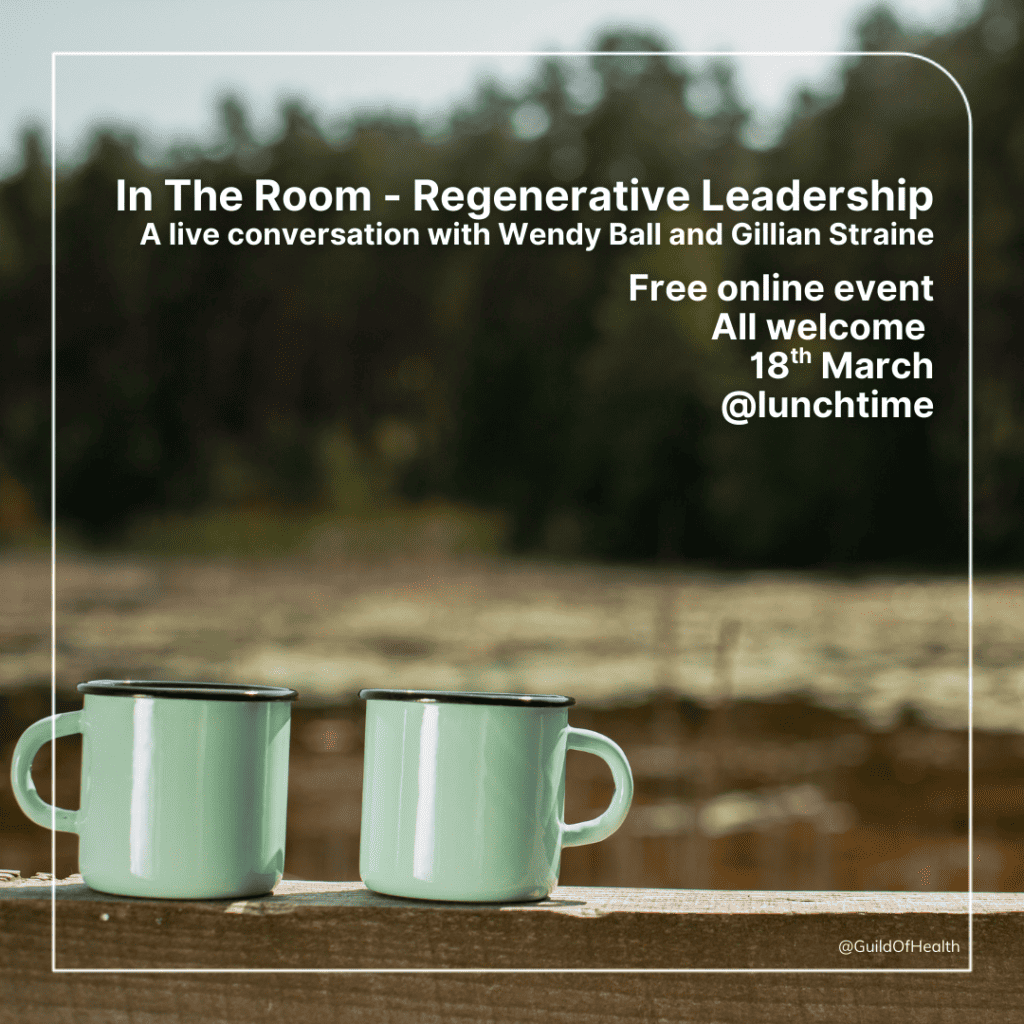
In the Room
Enjoyed the podcast? Join in the conversation live with Wendy and Gillian on 18th March. All welcome

Join the mailing list
It’s the best way to hear about all of our upcoming courses, events and news.

Explore our online courses
There are lots to choose from! Perhaps you are interested in mental health, healthy working, or being trauma informed.