


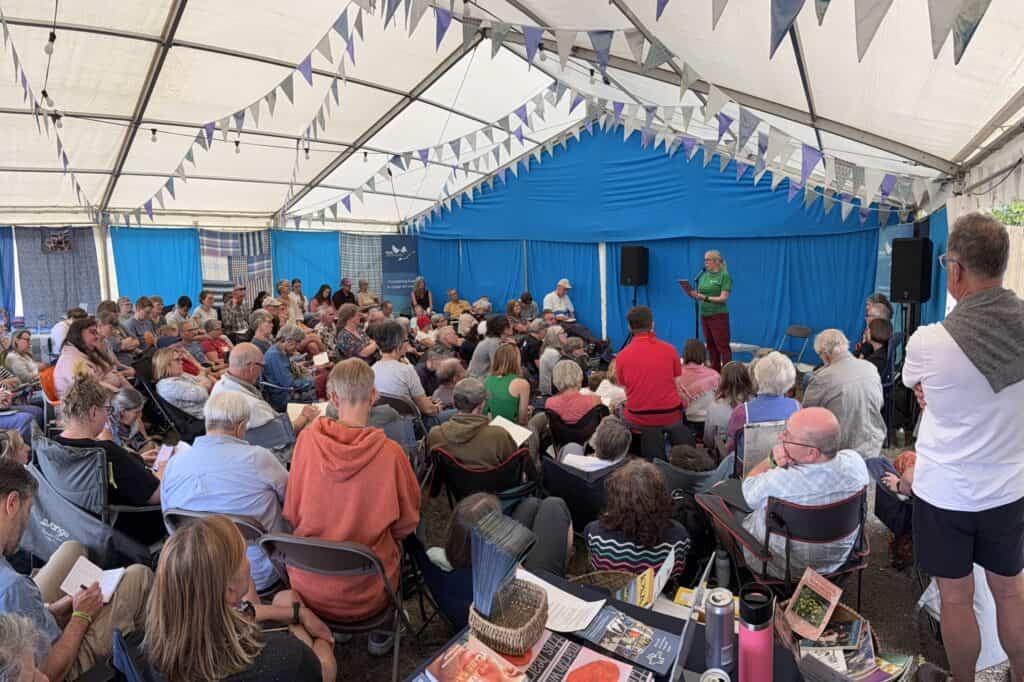
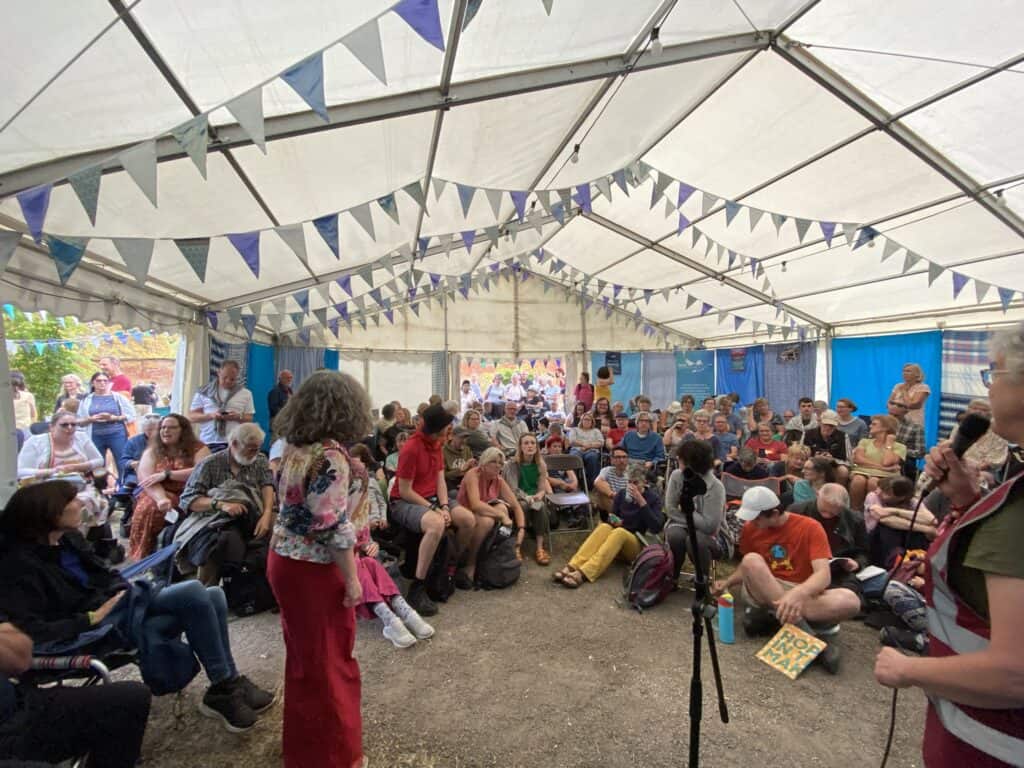
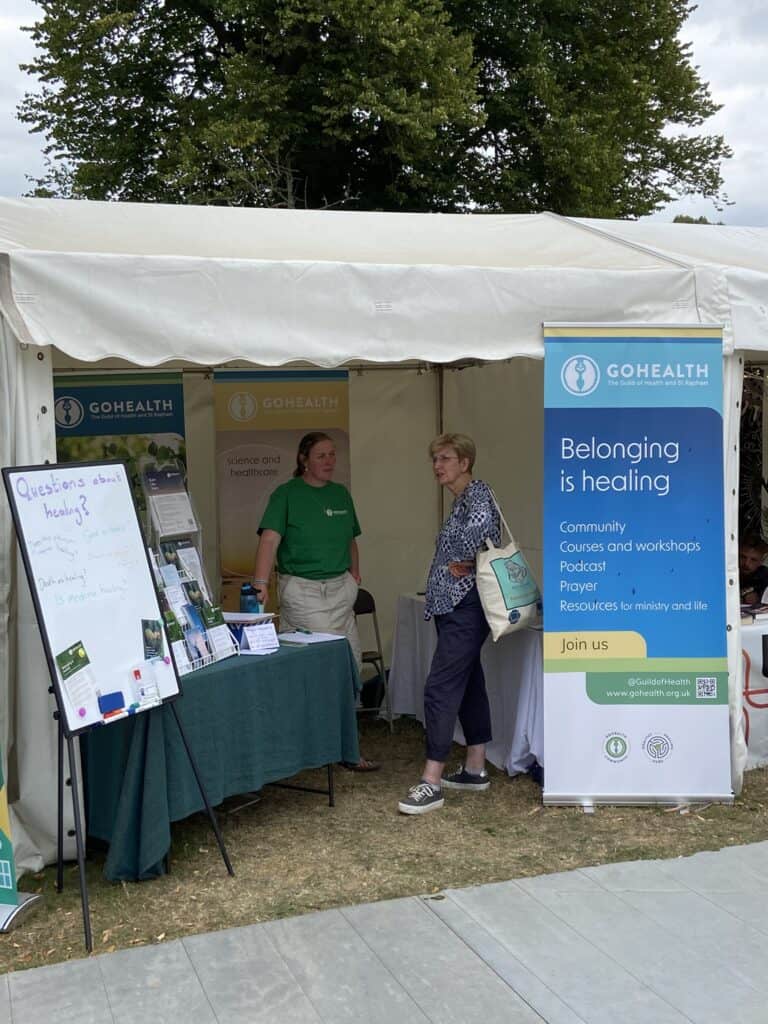
The text of Gillian Straine’s workshop delivered in the tent at the festival
Introduction
I was reminded this summer, when I visited Iona Abbey again, of your clear mission and vision – to work for peace and justice, to ground it all in the mandate of Jesus to love, and to entangle it all with worship. This is the stuff that changes the world. And it is an honour for GoHealth to be linked to the Iona Community in this way.
This morning I’m offering a one-hour workshop exploring something we are deeply passionate about at GoHealth – holistic health.
Last year, I spoke about burnout. Today, I want to take a step further, or rather backwards and think about the roots of health – not just responding when things go wrong, but building health and wholeness so that we can keep showing up with hope in our complex times.
And, I would argue, this is not an optional extra when all the work is done:
It is not an add-on to mission – it is at the centre of it;
It is not us jumping on the bandwagon of the booming health marketplace – this is central to our theology going back centuries;
It is not about learning health stuff just so we can fit in even more tasks.
I want to offer an exploration of health – informed by science and grounded in faith – as a fundamental expression of Christian life.
Why now?
In the NHS – Mental health services are collapsing and need is rising in our communities. Our churches can be hubs for healing in real ways for the whole community.
Why now?
In the UK, 74% of adults report feeling overwhelmed by stress and one in four experiences mental health problems. We have a theological orientation that makes a real different (and science shows it)
Why now?
Our church needs our help to reimagine its mission, to heal from abuse of power and to know deep in our souls the difference that our faith can make in individual lives, in communities and in the world. Church leaders are suffering huge stress.
Why now?
The needs of the world are so high. We need an energized faith and a unashamed care of self (love ourselves like God does maybe) it we are to stay well in the work of tending to it.
This festival is about “hope in the making.” But hope has to be rooted in reality, and reality requires care – of self, of mind, of body, and of spirit. Scripture is full of this wisdom, and spiritual practices have always embodied it. To nurture hope, and to make anything happen in the world, I suggest that we have to start with our own health and healing.
At first it can feel like a tension, can’t it? On the one hand, we long to make a difference in this vast, hurting world. On the other, here I am talking about something that sounds so small – our own health.
But I was struck on Iona by this very paradox: a tiny, windswept island, and yet from it has flowed a vision of peace and justice that has inspired people across the globe. The scale of the mission depends on the depth of the roots. In the same way, if we are to meet the challenges of today as Christians, we must begin with our own holistic health – because it is from wholeness that hope and healing flow.
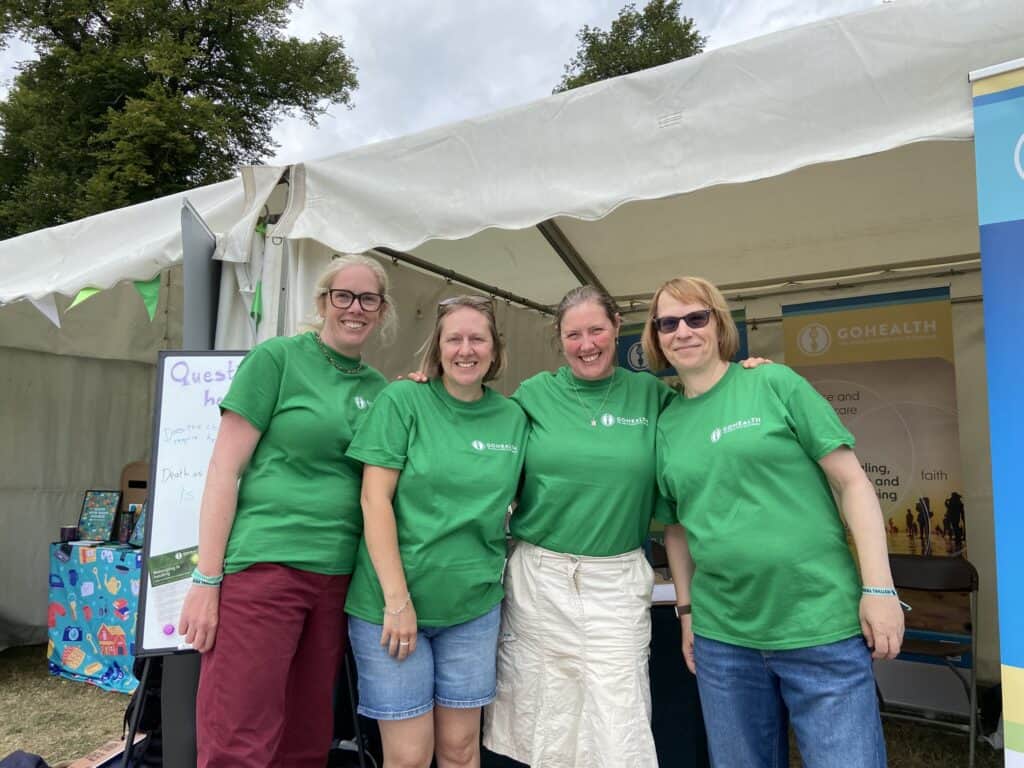
The offering of GoHealth
So why am I here, and why does this matter so much to me?
Part of it is personal. Like many of you, I know what it feels like to run on empty. To give out, and keep on giving, until suddenly you realise you’re running on fumes. For me, the journey into healing wasn’t an optional extra—it was survival. Learning how to tend to body, mind, and spirit has been as much about rediscovering my faith as it has about restoring my health.
That’s why I’m passionate about this work, and why I’m here today.
And it’s also why GoHealth exists. We are an ecumenical Christian movement with a simple vision: flourishing communities made up of flourishing individuals. For over a century we’ve been resourcing churches and individuals to nurture health, faith, and mission.
Today that takes the form of a community, podcasts, training, courses, reflections, and prayers. But at its heart, the calling has always been the same: to combine the wisdom of faith, the insights of science, and the practice of being a healing presence to ourselves and others, so that the Gospel’s healing message can reach into our communities.
And this isn’t just about self-care for the sake of it—it’s about sustaining hope, embodying the Gospel, and daring to believe that belonging itself can be healing.
What is LiFT and why did we create it
So what does this look like in practice? Well, this year we’ve launched something new: a way to bring together faith, health, and science in a practical, hopeful programme. It’s called LiFT – Life in Fullness, Together.
LiFT was created in partnership with Dr Richard Pile, a GP and lifestyle medicine expert who reminds us that “spirituality is fundamental to our wellbeing.” It’s been beautifully written and collated by Wendy Lloyd from GoHealth, who many of you will also know from her work with the Iona Community.
The programme is holistic. It explores six key areas of health: community, purpose, sleep, nutrition, movement, and stress. But what makes it different is how it starts: not with perfection, not with pressure, but with you—exactly where you are. LiFT is about connection, encouragement, and finding steps toward the fullness of life that Jesus offers, whatever our physical or mental health might look like right now.
Because that fullness of life is not just an abstract idea. It is a transformed life—rich with purpose, hope, and wellbeing. It echoes the biblical vision of shalom: a life of wholeness, peace, and flourishing.
And LiFT is rooted in Scripture—in the promise of John 10:10. Jesus says: “The thief comes only to steal, kill, and destroy. I have come in order that you might have life—life in all its fullness.”
Think of how Jesus healed in the Gospels. It was never only physical. Healing always restored people to community, to dignity, to relationship. It was about wholeness, together.
That’s the vision behind LiFT. It’s not a quick fix, or a simplistic answer. But it does hold fast to a deep truth: that there is no separation between body, mind, and soul. We are beloved, made in the image of God. We are already accepted. We are already enough.
And that’s why this programme dares to say: wellbeing is not about chasing a perfect life somewhere in the future—it’s about living meaningfully, deeply, and fully now. Even through struggle. Even through fragility. Even through the whole of the human experience, right to its end.
Intro to the topics covered in LiFT
We’ve talked about why health and healing matter, and why they are part of our faith and mission. I want to spend the next little while exploring six areas that both science and faith point to as vital for our flourishing: community, purpose, nutrition, movement, sleep, and stress.
Each of these is a rich topic in itself—we could spend hours on any one of them! Today I simply want to give us a first look: a glimpse of the science, and a glimpse of how our Christian theology, spirituality, and community life already echo and deepen these truths.
Think of this as scene-setting—an invitation to see that when science tells us what helps us flourish, faith has often been there first, holding this wisdom in practices of worship, prayer, rest, and care for one another. And while we won’t go into all the practical steps this morning, I hope this will spark curiosity for how these six areas could become part of our discipleship, our life together, and even our witness to the world.
Community
Science increasingly confirms what human experience has always known: we are made for connection. Research shows that people with strong social relationships are 50% more likely to live longer than those without. Loneliness, by contrast, carries health risks equivalent to smoking fifteen cigarettes a day—raising the likelihood of heart disease, stroke, dementia, and premature death.
As Dr Richard Pile, GP and author, reflects: “How connected we feel to others is the single most important determinant of wellbeing. If I had to pick one area to focus on with my patients, to the exclusion of all others, it would be this.”
Belonging changes us. Even fleeting moments of connection—being recognised, welcomed, seen—boost wellbeing, strengthen resilience, and make us more compassionate.
As Geoffrey Cohen writes in Belonging: The Science of Creating Connection and Bridging Divides: “Even fleeting experiences of belonging…raise our sense of wellbeing and self-worth, improve our performance, lessen our defensiveness and hostility, increase our tolerance of outsiders, and make us more compassionate. We become more humane.”
The Christian tradition has always held belonging at its heart. St Paul writes to the Corinthians: “For just as the body is one and has many members, and all the members of the body, though many, are one body, so it is with Christ” (1 Cor 12:12). To belong in Christ is not simply to join a club. It is to discover who we are at the deepest level: created, loved, and of infinite worth to God. St Augustine put it beautifully: “You have made us for yourself, O Lord, and our heart is restless until it rests in you.”
At its best, the church embodies this belonging. It is a community where no one is forgotten, where the suffering of one is carried by all, and where each person is known as beloved. True health, then, is never solitary. It is relational—woven in our life with others, with creation, and with God. To be well is to belong.
Purpose
Science is increasingly showing that living with a sense of purpose is not only fulfilling but profoundly protective for our health. Studies suggest that people who can articulate a “why” for their lives are less likely to suffer a heart attack, even with existing heart disease.
Purpose is linked with reduced risk of stroke, better cognitive health in later life, and even anti-inflammatory benefits.
Dan Buettner, founder of the Blue Zones project, which studies the world’s longest-living communities, notes: “People who pay attention to their spiritual side have lower rates of cardiovascular disease, depression, stress, and suicide, and their immune systems seem to work better. To a certain extent, adherence to a religion allows them to relinquish the stresses of everyday life to a higher power.”
Purpose gives coherence and meaning to our lives. It answers the deepest questions: Why am I here? What am I for? What difference can my life make? Without it, life easily fragments into busyness or survival. With it, we flourish.
The Christian tradition is rich in wisdom about purpose. We are not left to invent meaning on our own; rather, our lives are caught up in the greater story of God’s love. Thomas Merton reminds us: “We do not find peace by rearranging the circumstances of our life, but by finding out who we are at the deepest level.” St Irenaeus famously declared: “The glory of God is a living human being; and the life of the human consists in beholding God.” And Frederick Buechner described vocation as “the place where your deep gladness and the world’s deep hunger meet.”
If modern science tells us that purpose is essential to health, the Christian faith proclaims that this is where we are experts. Our worship, our stories, our prayers, our service—all point us beyond ourselves into the calling of God.
Purpose, then, is not simply about personal fulfilment. It is about living into a divine invitation: to discover who we truly are, to be caught up in the love of God, and to join in God’s healing work in the world.
Nutrition
Food is more than fuel. As Professor Norman Wirzba puts it, food is “God’s love made nutritious and delicious.” Every meal is a gift, a sign of God’s abundance, and an invitation into communion with God and with one another.
The Psalms remind us that God prepares a table before us; the Eucharist makes this vision tangible. When we share bread and wine, we don’t simply remember Christ—we are drawn into his life, his way of being, and his mission in the world. Eating, then, is a sacramental act: a moment of divine encounter that shapes a culture of gratitude, hospitality and care.
This theological vision stands in stark contrast to the reality of our modern food systems. Industrialised agriculture and the rise of “Big Food” have flooded our tables with ultra-processed products designed for convenience and profit, rather than nourishment. As a result, in countries like the UK and US, most adults now live with overweight or obesity. This has become so normalised that motivation to change often fades, even though the health consequences are stark: increased risks of heart disease, diabetes, stroke and cancers.
Science is showing that the problem is not simply cholesterol or fat intake, but inflammation—an underlying process linked to heart disease, diabetes, depression and cancer. Diets high in refined carbohydrates and processed foods drive this inflammation, while eating more whole, plant-based foods, balanced with mindful consumption of animal products, supports health. A diverse, antioxidant-rich diet also fosters a healthy gut microbiome, which is vital for digestion, immunity and even mental well-being.
Yet our struggles with food are not just biological. They are deeply emotional and spiritual. Many people’s eating patterns are shaped by childhood experiences, trauma, or the stresses of modern life. Quick fixes like sugar taxes and labelling help, but they cannot address the deeper hunger. Faith reminds us that every meal can become an act of healing—of body, soul and community—when we receive it with gratitude, share it with others, and honour the earth that provides it.
Movement
Our bodies are fearfully and wonderfully made for movement. Stillness has its place—moments of prayer, silence, and rest—but physiologically, movement is our default state. Prolonged stillness leads to discomfort, while even simple, gentle movement brings life. In caring for our bodies, we do not step aside from faith; we live it. As Dr Paula Gooder reminds us, “Your body is exactly who you are—your soul and your spirit and your mind is all together in one glorious whole.”
The Christian tradition has an interesting relationship with the body, but there are deep and firm strands that emphasis the importance of the body. We are afterall made in God’s image, and salvation was delivered through the body of Christ. St Paul writes in 1 Corinthians 12 that “the body is one and has many members… so it is with Christ.” In other words, our physicality is not only individual but communal. We move, stretch, strengthen, and care for our own bodies not simply for ourselves, but for the sake of the whole body of Christ. As Prof. Joel James Shuman puts it, “Through God’s grace we become Christ’s body… for the life of the world.”
And yet, we also groan. As Paul writes in Romans 8, our bodies age, ache, stiffen, and fail. But this groaning is not hopeless. Every act of movement, however small, is a way of participating in God’s ongoing work of redemption—of leaning toward wholeness in the here and now.
Science confirms what scripture and tradition have long proclaimed: movement is essential, not optional. Inactivity is now considered as dangerous as smoking, one of the leading causes of preventable death worldwide. Dr Richard Pile names this “Movement Deficiency Disorder”—a vicious cycle of inactivity leading to fatigue, aches, anxiety, and ill health. Yet even small steps break the cycle. Standing for two hours a day can reduce overall mortality risk by 10%. Just 90 minutes of brisk walking a week can extend life by years. Movement also lowers risks of obesity, diabetes, heart disease, dementia, depression and more—without side effects, cost, or complex monitoring.
Something is always better than nothing. Every walk, stretch, or climb of the stairs is not only medicine for our bodies but a spiritual act—a way of honouring God with the gift of embodiment.
Sleep
Sleep is often the most overlooked area of health, yet it touches almost everything else. Better sleep lowers risk of injury, sharpens our minds, supports healthy weight, strengthens immunity, and restores our energy. As neuroscientist Prof. Matthew Walker puts it: “We no longer have to ask what sleep is good for. Instead, we are now forced to wonder whether there are any biological functions that do not benefit by a good night’s sleep.”
But for Christians, sleep is more than biology—it is also theology. The Psalmist tells us: “It is in vain that you rise up early and go late to rest, eating the bread of anxious toil; for he gives sleep to his beloved” (Psalm 127:2). Rest is a gift, not a luxury. In a culture that prizes busyness and productivity, the simple act of lying down to sleep can be countercultural faithfulness—an embodied way of saying, “I am not God. The world can rest in His hands.”
The Revd. George MacDonald once wrote, “Sleep is God’s contrivance for giving man the help He cannot get into him when he is awake.” At night, control is relinquished and our striving ceases. As theologian Andrew Bishop notes, sleep is a place where “the ego is quieted, control is relinquished and we become open to God’s transforming work in us.” This is why he calls for a positive theology of sleep, or Theosomnia—“God-sleep”—a way of receiving sleep itself as hallowed, blessed, and offered to God.
Science and faith agree: sleep is holy necessity. As we drift into unconsciousness, our brains are washed clean through the glymphatic system, memories are sorted, learning is strengthened, and our bodies repair. Chronic sleep loss, by contrast, damages nearly every system in our bodies—raising risks of heart disease, dementia, diabetes, depression, and cancer.
To embrace sleep is to embrace both our limitations and God’s grace. We are not machines powering down; we are creatures, invited into rest, renewal, and sometimes even divine encounter through dreams. Sleep is medicine for our bodies, but it is also a sacrament of trust—a nightly rehearsal of resurrection hope.
Stress
Science tells us that stress is not something to erase from life, but something to understand. In short bursts, it sharpens focus, fuels performance, and even strengthens resilience. When the brain perceives a threat, the amygdala signals the hypothalamus to release adrenaline and cortisol, priming us for action. This “fight-or-flight” response is life-saving in the moment—but when switched on continually, it becomes toxic. Chronic stress keeps cortisol levels high, undermines immunity, fuels inflammation, and increases the risk of depression, cardiovascular disease, dementia, and even shortened life expectancy. The World Health Organization now describes stress as one of the great epidemics of our time, with links to more than 70% of all visits to GPs. Long-term stress has been compared to smoking in terms of its damage to health, and studies show that it can literally accelerate biological ageing at the genetic level.
And yet, not all stress is destructive. Research shows that how we think about stress shapes its effects in the body. If we interpret the racing heart and quickened breath not as danger but as energy for the task ahead, the body responds differently—releasing oxytocin, the “bonding hormone,” which supports resilience and deepens connection. Stress reframed can become not a threat but an ally, an opportunity for growth.
Faith echoes this reframing. Scripture never denies stress or suffering, but points us to ways through it. James writes: “Consider it pure joy whenever you face trials,” because perseverance and maturity are formed under pressure. Jesus’ invitation—“Come to me, all you who are weary and burdened, and I will give you rest”—offers not escape but a reorientation. Christian tradition has long cultivated practices of stillness and attention: the quiet of contemplation, the rhythm of prayer, the watchfulness of the Examen. Long before “mindfulness” was popularised, the Christian heritage of silence and presence provided a way to step off the treadmill of anxiety and re-centre in God’s love.
And so, stress might become not an enemy but an invitation. An invitation to pause instead of panic, to rest instead of rush, to find presence rather than be pulled into distraction.
Why together….
We all know, in theory, how to look after ourselves. Eat well, rest, move, pray, connect. The problem is not lack of knowledge. The real puzzle is this: if we already know so much about health, why don’t we actually do it? Why is it so hard to live in ways that sustain us?
Holistic health—especially for those of us who want to live as activists, carers, and changemakers—is not about gathering more information. It is about creating the conditions that help us live differently. Studies on habit formation remind us that we rarely change alone. What makes the difference is community, accountability, rhythm, and the gentle encouragement of others walking the same path.
That is why in LiFT, we practice both individually and collectively. We begin with small personal practices, but we also explore what becomes possible when we do these things together. Because health and healing have never been solitary achievements; they are always collective. Our flourishing is tied to one another’s.
And this raises deeper questions. If health is always relational, then what about the systems we live in—the structures that either foster wellbeing or wear us down? To talk about healing is also to talk about justice, belonging, and the kind of world we are building.
This is why LiFT works on three levels: personal practices, community rhythms, and systemic awareness. Together they help us move beyond just knowing what is good for us, toward actually living it—sustainably, faithfully, and with hope.
Interested? Take your next step with GoHealth

Join the GoHealth Community and register for The LiFT Programme before 31st October

Join the mailing list to stay in contact with our work and vision.
Join The GoHealth Community
Join a friendly and growing network of individuals who hold that faith in God helps us flourish; explore what this means in a complex world, and seek to hold honest conversations around healing.
Membership includes:
- The LiFT Programme
- Advent courses
- Weekly blessings and inspiration to connect health and faith in your life
- Articles, blogs, prayers and practices
- A growing library of online self led courses, including Burn Like Stars, Being Trauma Informed and the latest course from John Swinton’s Denis Duncan Lecture
- Monthly gatherings online
- Reductions at all events.
- Regular emails with all the latest events, courses and news from the Guild.
Click here to join today, and find belonging in a community where together we flourish. Just £5 per month