


Time as a Womb
The stones in the path felt like witnesses as I slowly and intentionally pilgrimaged toward St Ninian’s Cave. I wasn’t even supposed to be here. It was a turn of events so out of my control, and yet so clearly guided by the symbolic world we live in.
A storm had kept us a day late on Iona. A concert was cancelled. The kids were playing with a train on the sheep-wool carpet of the Abbey while I thumbed through a book on Celtic crosses. One cross nearly leapt off the page… a carved stone once kept in St Ninian’s Cave before being moved to a small museum in Whithorn, on the southwest coast of Scotland.
A near-audible voice urged me to take the train to Dumfries, to make a pilgrimage alone to St Ninian’s Cave and sit in it with a listening heart.
I was composing a folk opera about making beauty from the shadow of my Western Christian heritage, and the Hebrides were part of my research… a listening pilgrimage in ancestral lands.
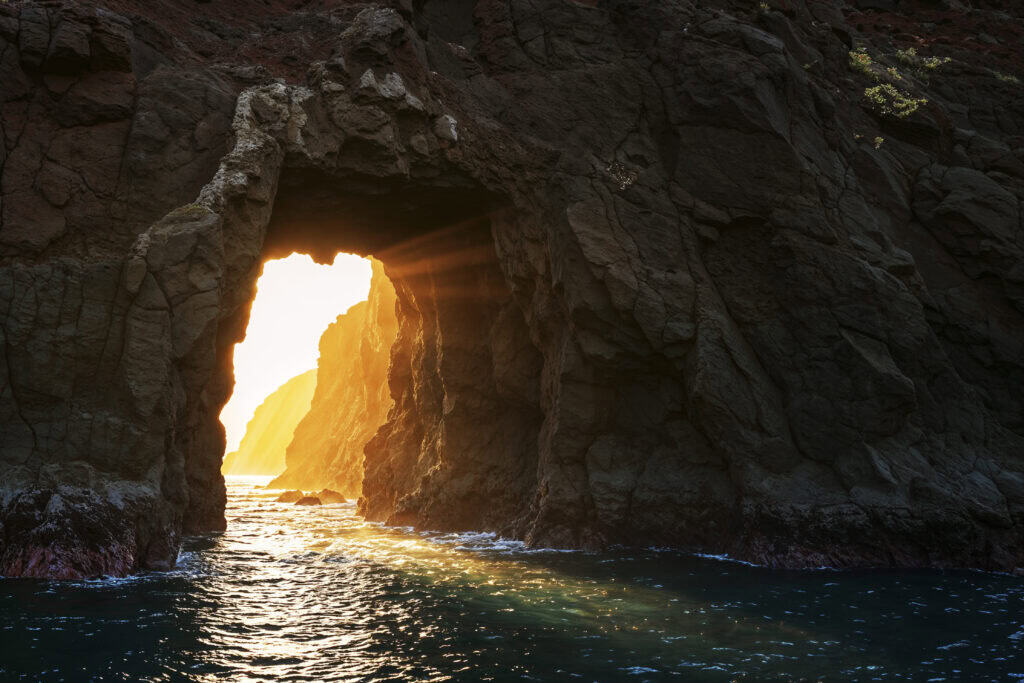
When I arrived on the rocky beach, I picked my way across the stones and entered the cave. The birthplace of Christianity in Scotland.
I like threshold spaces. Intertidal places; where two or more worlds converge and strange life emerges. Some pilgrimage to St Ninian’s Cave out of devotion to Christianity alone. For me, it was a threshold destination, to listen to all the ages very deeply. And to wait.
In a sense, what really happened in that cave is that I journeyed. I was shown the “beauty and terror” Rilke spoke about: ochre paintings flickering in firelight, conquest and siege, and yet, even in those times we now remember only as supersession, I saw living conversation, porous and organic, where one deep calls to another. I saw beneath it all, that something older keeps weaving toward creative convergence, most often humbly held by the folk on the ground learning to be neighbours. Symbols make art together. Folk stories merge. Prayers open.
And the celtic Christ, Ìosa arrived in the cave, familiar, and ancient.
We are once again in the throes of a world being remade. Many of us are waiting for something we cannot name. Words that once carried life feel tired because the fragrance of their original intent was sealed away. And yet, waiting could be the ancient medicine that opens the seal. Because waiting is about noticing the movement beneath movement. The slow rearranging of the soul toward readiness.
Perhaps this is what Advent asks of us: to follow what the Philokalia calls the way of putting the mind in the heart. To wait as the soil waits for the seed, as the womb waits for the quickening, as Mary’s body expands for the unnameable, as Joseph waits in powerlessness while the mystery gathers.
In one of the old folk traditions of Bethlehem, they say that Jesus was born in a cave. An earthen hollow not unlike Ninian’s on the Scottish shore. Both cradle the same paradox: that waiting and birthing are one continuous movement.
And so this Advent, I am remembering the cave. How the tide rose and fell… how the gulls cried… and how waiting is really to consent to time as a womb.
The world will go on rushing, but those who enter the dynamic stillness of waiting will find that ancient illumination St John of the Cross called the “lucky dark,” and they will know what my stone-raising ancestors knew when they aligned their circles to the returning light.
Share your thoughts
Reflect on these profound ideas shared by Alana, of time as a womb, of waiting and birthing being one continuous movement. If you wish, share your reflections below.
Thank you so much for sharing this deeply profound experience.
For me ‘waiting’ seems to be the most powerful theme this Advent even though it is always there in this season.
Father God, help us to wait in the stillness wherever we find it this Advent. 🙏🏻
I am trying to give time to God as I wait but, like many clergy, I am also enveloped in Christmas as I prepare my Homily for Midnight Mass. So it is the final sentence of Alana’s beautiful reflection that will sit with me as I hear echoes of John 1:5 and the cosmic significance of the one for whom we wait.
Thank you